
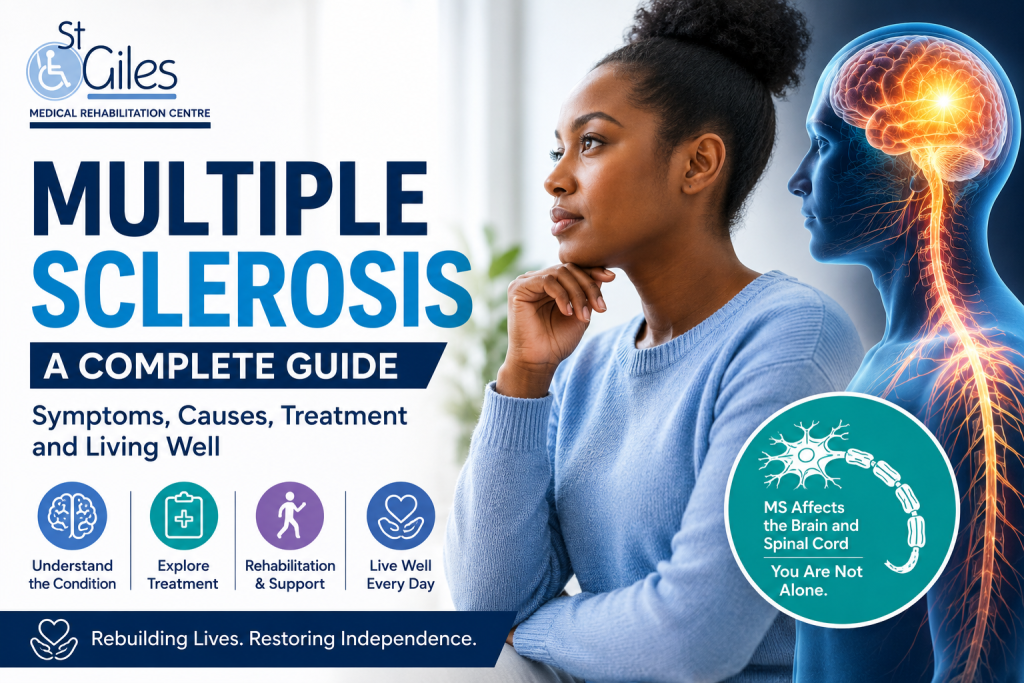
Multiple sclerosis, commonly known as MS, is a lifelong neurological condition that affects the brain and spinal cord. It can influence movement, vision, sensation, balance, energy levels and many other aspects of daily life.
MS affects each person differently. Some people experience mild symptoms that come and go, while others develop more persistent difficulties over time. Although there is currently no cure, treatment and rehabilitation can help reduce disease activity, manage symptoms and support independence.
What Is Multiple Sclerosis?
The brain and spinal cord make up the central nervous system. They communicate with the rest of the body through nerve fibres that carry electrical messages.
These nerve fibres are protected by a fatty covering called myelin. Myelin works in a similar way to the insulation around an electrical cable, helping nerve signals travel quickly and efficiently.
In MS, the immune system mistakenly attacks myelin and causes inflammation. This can damage the myelin, the nerve fibres beneath it, or both. Areas of damage are sometimes called lesions, plaques or sclerosis.
As the damage develops, messages travelling between the brain and the body may become slower, distorted or interrupted. The symptoms a person experiences depend partly on which areas of the brain or spinal cord are affected.
What Are the Symptoms of MS?
There is no single set of symptoms experienced by everyone with MS. Symptoms may appear suddenly or gradually, and they may improve, worsen or change over time.
Common symptoms include:
Fatigue
MS-related fatigue can be more severe than ordinary tiredness. A person may feel physically or mentally exhausted even after resting, and simple activities may require much more effort than before.
Vision problems
MS may affect the nerves involved in vision. Symptoms can include:
- Blurred vision
- Double vision
- Pain when moving one eye
- Reduced colour vision
- Temporary loss of vision, often in one eye
Inflammation of the optic nerve is known as optic neuritis and can sometimes be an early sign of MS.
Numbness and unusual sensations
A person may experience:
- Numbness
- Tingling
- Burning sensations
- Pins and needles
- Electric shock-like sensations
- Increased sensitivity to touch
These sensations may affect the face, arms, legs or other parts of the body.
Muscle weakness and stiffness
MS can interrupt the nerve signals that control muscles. This may lead to weakness, muscle tightness, painful spasms or stiffness known as spasticity.
Problems with balance and walking
Some people develop difficulty with coordination, balance or mobility. They may feel unsteady, drag one foot, stumble more often or find it harder to walk long distances.
Tremors and poor coordination
MS can cause involuntary shaking, clumsiness or difficulty controlling precise movements. Activities such as writing, eating or fastening buttons may become more difficult.
Bladder and bowel problems
Symptoms may include:
- Urinating more frequently
- Sudden urgency
- Difficulty emptying the bladder
- Urinary leakage
- Constipation
Changes in thinking and memory
Some people experience difficulty with concentration, processing information, planning, remembering recent events or finding the right words. These changes are often subtle but can affect work, education and daily responsibilities.
Speech and swallowing difficulties
Speech may become slower, quieter, slurred or less clear. Some people may also experience difficulty chewing or swallowing safely.
Pain
MS may cause nerve pain, muscular pain or discomfort related to stiffness, poor posture and reduced mobility.
Emotional and psychological changes
Living with an unpredictable condition can affect emotional wellbeing. Depression, anxiety, irritability and mood changes may occur. In some cases, MS itself may also affect the areas of the brain involved in emotional regulation.
Other possible symptoms include dizziness, sleep disturbances, sexual difficulties and sensitivity to heat.
Early Signs of Multiple Sclerosis
Early MS symptoms are not always obvious, and many can also be caused by other conditions. Possible early signs include:
- Unexplained numbness or tingling
- Blurred or painful vision
- Weakness in an arm or leg
- Persistent problems with balance
- Unusual fatigue
- Muscle stiffness or spasms
- Dizziness
- Problems with coordination
Experiencing one of these symptoms does not necessarily mean that someone has MS. However, unexplained neurological symptoms that persist, recur or affect daily function should be assessed by a healthcare professional.
What Causes MS?
The exact cause of MS is not fully understood. It appears to develop through a combination of immune-system, genetic and environmental factors.
MS is not contagious, and it cannot be passed from one person to another.
Possible risk factors include:
Genetics
MS is not usually inherited directly, but having a close relative with the condition may increase a person’s risk. Most people who have a family member with MS will not develop it themselves.
Environmental factors
MS occurs more frequently in some geographical regions than others. Researchers have studied possible links involving sunlight exposure, vitamin D levels and other environmental influences.
Viral infections
Certain viral infections may contribute to the immune changes associated with MS. Research has identified a particularly strong association between MS and previous infection with the Epstein-Barr virus, although most people infected with the virus never develop MS.
Smoking
Smoking is associated with an increased risk of developing MS and may also contribute to faster disease progression.
Sex and age
MS is more commonly diagnosed in women than men. It can develop at any age but often begins in early or middle adulthood.
The Main Types of Multiple Sclerosis
MS is classified according to how symptoms develop over time.
Clinically Isolated Syndrome
A clinically isolated syndrome is a first episode of neurological symptoms caused by inflammation or damage to myelin. It may be the first sign of MS, but not everyone who experiences it will later be diagnosed with the condition.
Relapsing-Remitting MS
This is characterised by clearly defined episodes of new or worsening symptoms known as relapses. These are followed by periods of partial or complete recovery called remissions.
A relapse may last for days, weeks or months. Between relapses, symptoms may improve significantly, although some difficulties can remain.
Secondary Progressive MS
Some people with relapsing-remitting MS later develop secondary progressive MS. In this stage, disability or neurological difficulties gradually worsen, whether or not distinct relapses continue to occur.
Primary Progressive MS
In primary progressive MS, symptoms gradually become worse from the beginning without clear early periods of relapse and remission. The rate of progression varies from one person to another.
How Is MS Diagnosed?
There is no single test that can diagnose MS on its own. Diagnosis is usually made by a neurologist after considering the person’s medical history, symptoms, examination findings and test results.
Investigations may include:
Neurological examination
The doctor may assess:
- Reflexes
- Muscle strength
- Coordination
- Balance
- Vision
- Sensation
- Walking ability
MRI scans
Magnetic resonance imaging can identify areas of inflammation or damage in the brain and spinal cord. MRI is one of the most important investigations used when MS is suspected.
Lumbar puncture
A small sample of cerebrospinal fluid may be collected from the lower back and tested for immune-system changes associated with MS.
Evoked potential tests
These tests measure how quickly electrical messages travel through certain nerve pathways.
Blood tests
Blood tests cannot confirm MS, but they can help exclude infections, vitamin deficiencies and other conditions that may cause similar symptoms.
Because MS can resemble several other neurological disorders, diagnosis sometimes takes time.
Is There a Cure for MS?
There is currently no cure for multiple sclerosis. However, significant progress has been made in treating the condition.
Modern treatment may help:
- Reduce the frequency of relapses
- Reduce new areas of nervous-system damage
- Slow disability progression in some forms of MS
- Treat individual symptoms
- Preserve mobility and independence
- Improve quality of life
Treatment should be personalised because the course of MS, symptoms and response to medication vary between individuals.
How Is Multiple Sclerosis Treated?
Treatment generally has four main components.
1. Treating relapses
A relapse is a period in which new symptoms appear or existing symptoms become significantly worse.
Some relapses are treated with high-dose corticosteroids. Steroids may help reduce inflammation and shorten the duration of the relapse, but they do not reverse all existing damage or cure MS.
Not every relapse requires steroid treatment. The decision depends on the severity of the symptoms and their effect on daily life.
2. Disease-modifying therapies
Disease-modifying therapies, often called DMTs, act on the immune system. Depending on the medication and type of MS, they may reduce relapses, limit new lesions and slow disease progression.
They may be given as:
- Tablets
- Injections
- Intravenous infusions
Each treatment has potential benefits, risks, monitoring requirements and side effects. A neurologist considers factors such as disease activity, age, general health, pregnancy plans and personal preference when recommending treatment.
3. Treating individual symptoms
Medication and other interventions may be used to manage symptoms such as:
- Muscle spasms
- Pain
- Fatigue
- Bladder dysfunction
- Constipation
- Depression
- Sleep problems
- Tremors
4. Rehabilitation
Rehabilitation does not stop the immune system from attacking myelin, but it can help a person function more effectively despite neurological changes.
A rehabilitation programme may include physiotherapy, occupational therapy, speech and language therapy, psychological support and mobility assessment.
The Role of Physiotherapy in MS
Physiotherapy can help people maintain movement, strength and confidence.
A physiotherapist may assist with:
- Muscle strength
- Flexibility
- Balance
- Walking
- Posture
- Coordination
- Managing spasticity
- Reducing the risk of falls
- Selecting walking aids
- Developing safe exercise programmes
Exercise should be adapted to the person’s abilities and symptoms. Overexertion can temporarily worsen fatigue, while heat may temporarily intensify neurological symptoms in some people. This does not necessarily mean that the underlying disease has progressed.
Regular, appropriately paced physical activity can support cardiovascular health, mobility, mood and overall wellbeing.
The Role of Occupational Therapy
Occupational therapy focuses on helping a person perform the activities that matter to them.
An occupational therapist may assess difficulties with:
- Bathing and dressing
- Cooking
- Writing
- Household tasks
- Employment
- Education
- Parenting
- Driving
- Leisure activities
Support may involve:
- Energy-conservation techniques
- Fatigue management
- Changes to the home or workplace
- Adaptive equipment
- Hand exercises
- Task simplification
- Cognitive strategies
- Advice on maintaining independence safely
Rather than simply asking whether a person can complete a task, occupational therapy considers how the task can be modified to make it safer, easier and less exhausting.
Speech and Language Therapy
MS can affect speech, communication and swallowing.
A speech and language therapist may help with:
- Slurred or unclear speech
- Reduced voice volume
- Breath control
- Finding words
- Communication strategies
- Swallowing difficulties
- Safer eating and drinking techniques
Swallowing problems should be assessed because they can increase the risk of choking, dehydration, poor nutrition and food or liquid entering the lungs.
Psychological and Emotional Support
Receiving an MS diagnosis can bring uncertainty, fear, frustration or grief. Symptoms can also affect employment, relationships, identity and future plans.
Counselling, psychological therapy and peer support can help people:
- Adjust to the diagnosis
- Manage anxiety and depression
- Cope with uncertainty
- Communicate with family members
- Set realistic goals
- Maintain social connection
- Develop strategies for stress and fatigue
Emotional wellbeing is an important part of neurological rehabilitation, not an optional extra.
Living Well With Multiple Sclerosis
Living well with MS does not mean ignoring its challenges. It means finding effective ways to manage symptoms, protect general health and continue participating in meaningful activities.
Stay physically active
Regular movement can help maintain strength, balance, cardiovascular fitness and flexibility. Activities may include walking, swimming, stretching, cycling, chair-based exercises or a personalised rehabilitation programme.
The type and intensity of exercise should reflect the person’s symptoms, safety and general health.
Manage fatigue
Helpful strategies may include:
- Planning demanding tasks for times of higher energy
- Taking scheduled rest breaks
- Alternating heavy and light activities
- Sitting for tasks where possible
- Prioritising important activities
- Maintaining a regular sleep routine
- Using assistive equipment where appropriate
Fatigue management is about using energy carefully, not avoiding all activity.
Eat a balanced diet
There is no single diet proven to cure MS. A balanced diet can nevertheless support general health, bowel function, heart health, bone health and weight management.
People should be cautious of restrictive diets or supplements promoted as cures. Supplements can interact with medication or cause harm when taken in excessive amounts.
Avoid smoking
Stopping smoking is one of the most important health measures for a person with MS because smoking is associated with worse health outcomes and more rapid disease progression.
Protect bone health
Reduced mobility and some medications can increase the risk of weak bones. Weight-bearing activity, appropriate nutrition and clinical assessment may be recommended.
Keep socially connected
Work, hobbies, relationships and community participation can support emotional wellbeing. Rehabilitation can help people adapt activities rather than abandoning them unnecessarily.
Attend regular medical reviews
MS can change over time. Regular follow-up allows the healthcare team to review medication, monitor disease activity, identify complications and adjust rehabilitation goals.
Ask for help early
A person does not have to wait until symptoms become severe before seeking therapy. Early intervention may make it easier to preserve function, prevent secondary complications and introduce practical strategies.
Can People With MS Continue Working?
Many people with MS continue working for years after diagnosis. The condition does not automatically mean that someone must stop working.
Depending on the symptoms, helpful adjustments may include:
- Flexible working hours
- More frequent breaks
- Reduced physical demands
- Remote-working arrangements
- Temperature control
- Accessible workspaces
- Modified equipment
- Changes to duties
An occupational therapist can help assess work-related challenges and recommend practical adjustments.
Can Women With MS Have Children?
Many women with MS can have healthy pregnancies. MS does not usually cause infertility, although pregnancy may require careful planning because some medicines are unsafe before conception, during pregnancy or while breastfeeding.
Anyone considering pregnancy should speak to their neurologist before stopping or changing medication.
Does MS Always Lead to Severe Disability?
No. MS is highly variable and does not follow the same course in everyone.
Some people develop substantial disability, while others remain independently mobile and active for many years. Earlier diagnosis, disease-modifying treatment, symptom management, rehabilitation and general health measures may all influence long-term function.
It is also important not to judge MS only by visible disability. A person who appears physically well may still be experiencing severe fatigue, pain, cognitive difficulties or other invisible symptoms.
When Should Someone Seek Medical Advice?
Medical assessment is advisable when a person develops unexplained neurological symptoms such as:
- Persistent weakness
- Loss of vision
- Painful changes in vision
- Numbness lasting several days
- New problems with balance
- Difficulty walking
- Recurrent neurological symptoms
- New bladder problems alongside weakness or numbness
Sudden weakness, facial drooping, speech difficulty, severe headache or sudden loss of vision may indicate a stroke or another medical emergency and require urgent medical attention.
Frequently Asked Questions
Is MS contagious?
No. Multiple sclerosis cannot be spread through physical contact, air, food, sexual activity or shared objects.
Is MS inherited?
MS is not directly inherited in the way some genetic conditions are. Family history can increase risk, but most relatives of people with MS will never develop it.
Does everyone with MS need a wheelchair?
No. Many people with MS never use a wheelchair. Others may use one occasionally or permanently to conserve energy, improve safety or maintain independence. Using a mobility aid should not be viewed as giving up; it can allow someone to participate more fully in daily life.
Can exercise make MS worse?
Appropriate exercise does not generally worsen the underlying disease. Temporary increases in fatigue or symptoms can occur, particularly with overheating or overexertion. A physiotherapist can help develop a safe programme.
Can MS affect memory?
Yes. Some people experience changes in concentration, memory, processing speed or planning. Cognitive rehabilitation and practical strategies may help.
Is MS fatal?
MS is a serious lifelong condition, but it is not usually directly fatal. Many people live for decades after diagnosis. The impact on health and life expectancy varies according to disease severity, complications, general health and access to treatment.
The Importance of Multidisciplinary Rehabilitation
Because MS can affect movement, communication, cognition, energy, mood and independence, effective care often requires more than one healthcare professional.
A multidisciplinary team may include:
- Neurologists
- General practitioners
- Nurses
- Physiotherapists
- Occupational therapists
- Speech and language therapists
- Psychologists
- Dietitians
- Social workers
- Rehabilitation specialists
The purpose of rehabilitation is not simply to treat an isolated symptom. It is to help the person participate in family life, work, education and the wider community as independently and confidently as possible.
Final Thoughts
Multiple sclerosis is a complex condition, but a diagnosis does not remove the possibility of an active, meaningful and fulfilling life.
The earlier symptoms are investigated and appropriate treatment begins, the sooner a person can access medication, rehabilitation and practical support. With informed healthcare, personalised therapy and strong social support, many people with MS continue working, raising families, pursuing goals and taking part in the activities that matter to them.
References
- National Institute of Neurological Disorders and Stroke. Multiple Sclerosis (MS). National Institutes of Health. Covers the causes, symptoms, disease patterns, diagnosis, rehabilitation and treatment of multiple sclerosis.
- National Health Service. Multiple Sclerosis. Overview of MS symptoms, causes, diagnosis, treatment and living with the condition.
- National Institute for Health and Care Excellence. Multiple Sclerosis in Adults: Management. NICE Guideline NG220. Published 22 June 2022 and reviewed in June 2026.
- National Multiple Sclerosis Society. Understanding Multiple Sclerosis. Information on the disease process, symptoms, diagnosis, treatment and progression of MS.
- National Multiple Sclerosis Society. Symptoms of Multiple Sclerosis. Guidance on the varied and unpredictable physical, cognitive and emotional symptoms of MS.
- National Multiple Sclerosis Society. Living Well With Multiple Sclerosis. Information on maintaining physical health, emotional wellbeing, independence and participation in everyday life.
- National Multiple Sclerosis Society. Diet, Exercise and Healthy Behaviours. Guidance on physical activity, nutrition and healthy lifestyle practices for people living with MS.
- NHS England. Treatment Algorithm for Multiple Sclerosis Disease-Modifying Therapies. Clinical guidance supporting the selection and safe use of disease-modifying treatments. Updated 29 June 2026.
- University Hospitals Birmingham NHS Foundation Trust. Multiple Sclerosis Diagnosis and Symptoms. Clinical information on common presentations, including optic neuritis, weakness, numbness, balance problems, fatigue and speech changes.
- University Hospitals Birmingham NHS Foundation Trust. Multiple Sclerosis Treatment. Information on relapse treatment, symptom management and disease-modifying therapies.
Medical disclaimer
This article is intended for general educational purposes only. It should not be used to diagnose multiple sclerosis or replace assessment, diagnosis or treatment by a qualified healthcare professional. Anyone experiencing persistent or unexplained neurological symptoms should seek professional medical advice.