
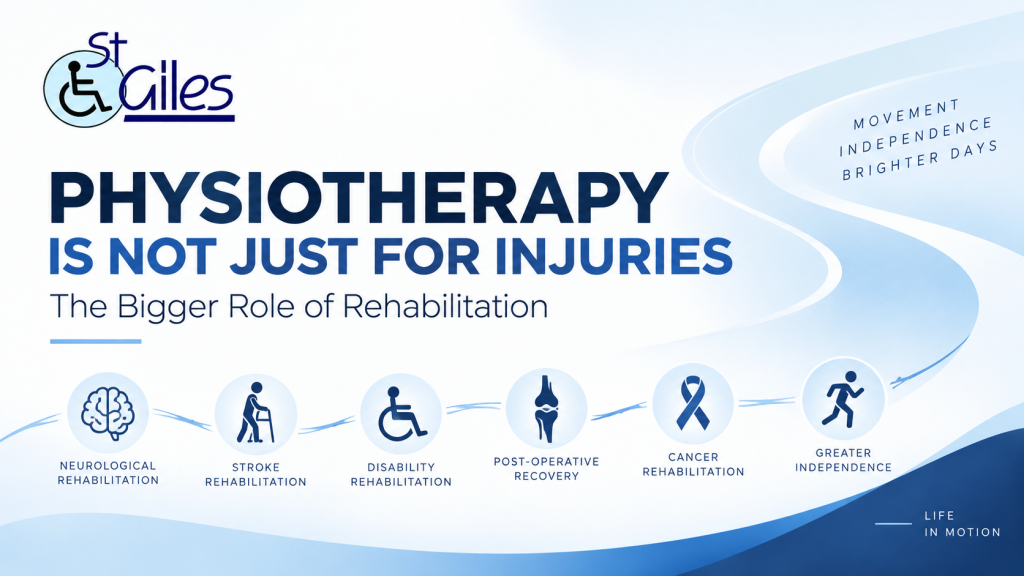
When many people hear the word physiotherapy, they think of sports injuries, back pain, or recovering after an operation.
Those are important areas of physiotherapy, but the profession reaches much further.
Physiotherapy and rehabilitation can also support people living with stroke, neurological conditions, disability, reduced mobility, long-term illness and the effects of cancer treatment. In many cases, the goal is not simply to “get fitter.” It is to help a person maintain or regain function, move more safely, manage symptoms and participate more fully in everyday life.
Recent research from the University of the Witwatersrand is helping draw attention to one area where this broader role is becoming increasingly important: exercise oncology.
Exercise is not always just fitness
In September 2026, Wits University highlighted doctoral research led by exercise physiologist Chérien Roux, who is working towards developing a South Africa-specific exercise-oncology protocol.
Her research focuses particularly on the use of exercise therapy in managing breast cancer-related lymphoedema, and on developing guidance that is relevant to South African patients, clinicians and healthcare realities. Wits notes that established exercise-oncology protocols already exist in countries such as Australia and the United States, while South Africa still lacks a standard protocol to guide care across cancer types.
That matters because people undergoing cancer treatment can experience challenges such as fatigue, muscle loss, reduced strength, changes in mobility and other treatment-related effects.
For many people, carefully prescribed physical activity can form part of supportive care before, during and after treatment. The American Cancer Society notes that physical activity is safe and helpful for most people with cancer and may help improve strength, range of motion, energy, quality of life and the ability to cope with some treatment-related side effects.
The key word, however, is prescribed.
Rehabilitation should be individualised
Exercise during illness is not the same as following a generic fitness programme.
The appropriate type, intensity and duration of activity can depend on factors such as:
- the person’s diagnosis
- the type and stage of their condition
- current treatment
- side effects
- existing strength and mobility
- other health conditions
- personal rehabilitation goals
The American Cancer Society similarly recommends that physical activity plans after a cancer diagnosis take into account the individual’s cancer type, treatment, symptoms, side effects and other health conditions.
Wits’ work also emphasises the importance of multidisciplinary care. Cancer rehabilitation can involve collaboration between oncologists, surgeons, physiotherapists, exercise specialists, psychologists and other healthcare professionals, depending on the patient’s needs.
This is one reason rehabilitation is best understood as healthcare, not simply exercise.
The role of physiotherapy is much broader than injury recovery
Cancer rehabilitation is only one example.
Physiotherapy can support people across many different conditions and stages of life.
Stroke rehabilitation
After a stroke, people may experience weakness, changes in balance, difficulty walking, reduced coordination and challenges with everyday movement.
Physiotherapy can form part of a broader rehabilitation programme aimed at improving movement, physical function and independence.
Neurological rehabilitation
Conditions affecting the brain, spinal cord and nervous system can change the way a person moves and functions.
Physiotherapy may be used as part of rehabilitation for neurological conditions to work on areas such as mobility, balance, strength, coordination and functional movement.
Disability rehabilitation
For people living with physical disabilities, rehabilitation is often about maximising function and participation rather than trying to achieve an unrealistic idea of “normal.”
That can include working on movement, transfers, mobility, positioning, strength, endurance and the safe use of assistive devices.
Post-operative rehabilitation
Surgery can temporarily reduce strength, mobility and confidence with movement.
Rehabilitation after an operation may help people progressively return to daily activities, rebuild physical capacity and regain function.
Cancer rehabilitation
Cancer and its treatment can affect the body in many ways.
Depending on the individual, rehabilitation may help support mobility, muscle strength, physical function and quality of life while also addressing specific treatment-related challenges.
Research and clinical guidance increasingly recognise the value of remaining appropriately active during and after cancer treatment.
Mobility and independence
Sometimes rehabilitation is not centred on a single diagnosis at all.
A person may need support because of reduced mobility, weakness, ageing, prolonged hospitalisation or difficulty performing everyday activities.
In these situations, physiotherapy can focus on a practical question:
What does this person need to be able to do in their daily life?
That might mean standing safely, walking, getting in and out of bed, using stairs, transferring into a wheelchair or simply moving with greater confidence.
Rehabilitation is about function
One of the most useful ways to understand rehabilitation is to think beyond symptoms.
Reducing pain can matter. Improving strength can matter. Increasing range of motion can matter.
But these changes are often valuable because of what they allow a person to do.
The real-world goals may be:
- walking to the bathroom independently
- returning to work
- getting dressed
- climbing stairs
- safely moving around the home
- returning to school
- caring for family
- participating in community life
- maintaining independence for as long as possible
That is why rehabilitation is highly individual.
Two people with the same diagnosis may have completely different priorities, abilities and treatment plans.
Movement can be part of medicine
The growing field of exercise oncology is a good reminder that movement should not always be viewed only through the lens of sport or fitness.
For some people, appropriately prescribed movement can be part of rehabilitation, symptom management and supportive healthcare.
This does not mean that everyone undergoing cancer treatment, recovering from stroke or living with a neurological condition should follow the same exercise programme.
It means the opposite.
Movement should be adapted to the person.
For people with cancer, for example, the American Cancer Society advises discussing exercise with the cancer care team, particularly because treatment, fatigue, infection risk, physical ability and other medical factors can affect what is safe and appropriate.
Looking at rehabilitation differently
The Wits research is particularly relevant in Southern Africa because it highlights the need for rehabilitation approaches that reflect the realities of patients in this region rather than simply importing protocols developed elsewhere.
Researchers are considering not only clinical evidence, but also factors such as transportation, finances, healthcare access and local socioeconomic circumstances.
That broader perspective matters.
Effective rehabilitation is not simply about having the right exercise on paper. It is about creating care that is appropriate, accessible and realistic for the person receiving it.
At St Giles
At St Giles Medical Rehabilitation Centre, rehabilitation is about helping people work towards better function, mobility and independence.
Physiotherapy forms part of that wider rehabilitation journey across a range of conditions and circumstances.
The objective is not simply movement for movement’s sake.
It is movement with purpose.
Exercise isn’t always just fitness. Sometimes, it’s rehabilitation.
References
University of the Witwatersrand. How prescribing physical activity for cancer could be a gamechanger. 15 September 2026.
American Cancer Society. Physical Activity When You Have Cancer.
American Cancer Society. Nutrition and Physical Activity During and After Cancer Treatment.
American Cancer Society. American Cancer Society Guideline for Diet and Physical Activity for Cancer Survivors.